Source Wooden 3D Puzzle for Recreation, Education, and Promotion
Compare 30 listings of Wooden 3D Puzzle options suitable for recreation, education, and promotional use. Buyers can review specifications like dimensions, certifications, and customization availability to find the right supplier for their needs.
Key considerations
Products List


3D Wooden Cross Puzzle, Adult 3D Wooden Puzzle, 3D Wooden Magic Trick Puzzle Factory
$3.98 - $4.98
MOQ: 5000 Pieces


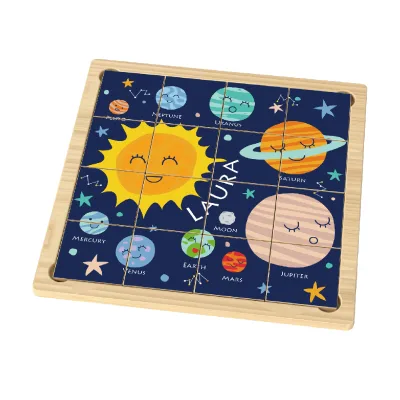
3-D Cube Block Puzzle Wooden, 3D Wood Cube Puzzle Toy Magic, 3D Puzzle Cube
$2.98 - $3.98
MOQ: 5000 Pieces

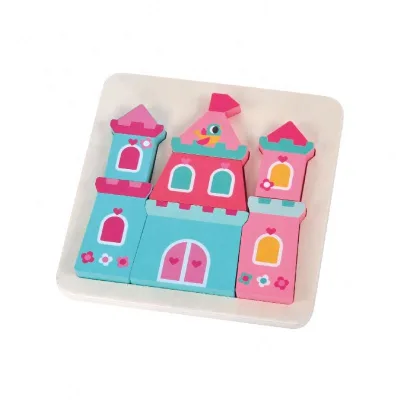
Wooden Toy Construction Kits Puzzle, 3D Puzzle Wood Craft Construction Kit Toys
$2.48 - $2.98
MOQ: 500 Pieces



Comprehensive Sourcing Guide
Strategic Sourcing Guide for Wooden 3D Puzzle Procurement
The global market for wooden 3D puzzles has evolved from a niche hobbyist segment into a significant category within the broader educational and recreational toy industry. For B2B buyers, sourcing these products requires a nuanced understanding of material science, regulatory compliance, and supply chain logistics. Unlike mass-produced plastic toys, wooden puzzles present unique challenges regarding material consistency, finish quality, and certification verification. This guide synthesizes observed market data and technical specifications to provide a disciplined framework for procurement professionals seeking to source high-quality wooden 3D puzzles. The focus remains on evidence-based decision-making, ensuring that every claim regarding product attributes, standards, and supplier capabilities is grounded in verifiable facts rather than marketing assertions.
Material Composition and Technical Specifications
The foundation of any Wooden 3D Puzzle lies in its material composition and physical dimensions. In the current supply landscape, the primary material observed is wood, often specifically identified as "Lotus Wood" in certain product lines, though generic wood sourcing is also prevalent. The structural integrity of these puzzles depends heavily on the density and grain of the wood selected. Buyers must distinguish between solid wood constructions and engineered wood composites, as the latter may affect the durability of interlocking pieces.
Technical specifications vary significantly across different product models. Observed data indicates a wide range of standard dimensions, with specific models adhering to precise measurements such as 30x14x8 cm or 14x14x5 cm. Other product lines utilize standard paper sizes like A5, A4, and A3 as reference points for their packaging or assembled dimensions. The scale of these puzzles is generally categorized as "Medium," making them suitable for a broad demographic. Shape variations are extensive, ranging from aquatic forms like "Fish" to architectural structures resembling "House" designs.
The manufacturing process often involves precision cutting to ensure that pieces fit together without excessive force or gaps. While some products are marketed as "DIY Toys" or "3D Puzzles," the underlying construction method must be verified. The presence of additional functional elements, such as music, light flashes, or sound recording capabilities, introduces electronic components like ABS plastic or EVA materials into the assembly. This hybridization of wood and plastic requires careful quality control to ensure that the electronic parts do not compromise the structural integrity of the wooden frame.
Regulatory Compliance and Certification Verification
Compliance is the most critical factor in the procurement of toys intended for children. The market data reveals a strong emphasis on international safety standards, with specific certifications frequently cited as ASTM, CE, and EN71. More granular standards, such as ASTM F963-96a, are also observed, indicating a rigorous adherence to safety protocols for mechanical and chemical hazards.
Buyers must verify that the supplier can provide valid, up-to-date test reports for these specific standards. The presence of "En71, CE, ASTM" in product listings suggests a baseline compliance, but the specific version of the standard (e.g., F963-96a) is crucial for determining the applicable safety requirements for the target market. It is important to note that while some background information mentions FSC certification, this should not be assumed as a standard attribute unless explicitly confirmed by the supplier for a specific batch.
The certification landscape is complex, and buyers should not rely on generic claims. Instead, they must request documentation that links the specific product model, such as KU-046091 or WR-001, to the corresponding test reports. The "CE" mark indicates conformity with health, safety, and environmental protection standards for products sold within the European Economic Area, while "ASTM" standards are critical for the North American market. Ensuring that the supplier's certification covers the specific material composition (wood, ABS, EVA) and the functional elements (electronics) is essential for avoiding regulatory bottlenecks at customs.
Cost Drivers and Pricing Dynamics
Understanding the cost structure of wooden 3D puzzles is vital for budgeting and margin analysis. The observed price range in the market spans from $0.20 to $13.69 USD, reflecting a vast disparity in product complexity, material quality, and functional integration. Several factors drive these costs. The primary driver is the material; solid wood or specialized woods like Lotus Wood typically command a higher price than composite materials. Additionally, the inclusion of electronic components such as motors, LEDs, or sound modules significantly increases the unit cost due to the complexity of assembly and the cost of the components themselves.
Packaging also plays a significant role in the final cost. Products are observed to be packed in "Paper Carton" or "Plastic" packaging, with some shipments arranged "by Sea." The choice of packaging affects both the unit price and the logistics cost. More robust packaging may increase the initial cost but reduce the risk of damage during transit, which is a common issue with wooden puzzles due to their fragile interlocking nature.
The Minimum Order Quantity (MOQ) is another critical cost driver. The observed MOQ range is 1 to 5000 units. For small buyers or those testing the market, an MOQ of 1 allows for low-risk sampling, while larger orders benefit from economies of scale. However, the supplier's R&D capacity and willingness to offer OEM (Original Equipment Manufacturer) services can influence the pricing structure. Suppliers with strong OEM capabilities may offer more competitive pricing for customized designs but might require higher volume commitments.
Typical Applications and Market Segmentation
Wooden 3D puzzles serve diverse applications, ranging from educational tools to promotional items and recreational activities. The target age group is predominantly children aged 3 to 8 years, a demographic that benefits from the cognitive development offered by assembly puzzles. The "Educational Toy" style and "Intellectual Toys" classification highlight their utility in fostering spatial reasoning, fine motor skills, and problem-solving abilities.
Beyond the educational sector, these products are frequently utilized for promotional purposes. The "Promotion" usage category suggests that businesses often source these puzzles as branded giveaways or corporate gifts. The "European & American" style indicates a design aesthetic that appeals to Western markets, which may influence the visual design and color schemes, such as the observed "Blue" color options.
The gender targeting is also a key consideration. While some products are marketed specifically to "Boys," others are designated as "Unisex," broadening the potential market reach. The versatility of the product allows it to be used in various settings, including classrooms, toy stores, and corporate events. The "Recreation" and "Puzzle" usage tags further emphasize their role in leisure activities, making them suitable for a wide range of retail channels.
Supplier Evaluation and Capability Assessment
Selecting the right supplier requires a thorough evaluation of their capabilities, location, and operational standards. The supply base is primarily located in China, with specific hubs identified in Jiangsu and Jinhua. These regions are known for their manufacturing expertise in toys and wood products. Buyers should verify the supplier's location to assess logistics efficiency and potential lead times.
Key evaluation criteria include the supplier's R&D capacity, which is noted as "OEM" in the data. This indicates that the supplier can handle custom designs and private labeling, a crucial feature for buyers seeking differentiated products. The availability of customization options allows buyers to tailor the product to their specific brand requirements, from color variations to unique shapes like "House" or "Fish."
Payment terms and trade conditions are also essential for risk management. The observed payment term is "Tt" (Telegraphic Transfer), and trade terms include "EXW," "Fob," "DDP," and "DAP." Buyers must understand the implications of these terms. For instance, "EXW" (Ex Works) places the maximum responsibility on the buyer for logistics, while "DDP" (Delivered Duty Paid) offers a more convenient, all-inclusive service. The choice of trade term should align with the buyer's logistics capabilities and risk tolerance.
Quality Control and Long-Term Procurement Considerations
Quality control in the Wooden 3D Puzzle sector must address both the physical integrity of the wood and the functionality of any integrated electronics. Given the "DIY" nature of these products, the precision of the cut pieces is paramount. Buyers should implement a rigorous inspection protocol that checks for splinters, loose joints, and the accuracy of the interlocking mechanism. The presence of electronic functions like "Music," "Flash of Light," and "With Remote Control" necessitates additional testing to ensure safety and reliability.
Long-term procurement considerations involve building a sustainable supply chain. Buyers should prioritize suppliers who demonstrate a commitment to consistent quality and compliance. The variability in product models, such as KU-00691, KU-021091, and KU-00921, suggests a dynamic product line. Maintaining a relationship with a supplier who can consistently deliver across different models is essential for inventory stability.
Furthermore, buyers should consider the environmental impact of their sourcing decisions. While FSC certification is mentioned in background data, it should not be assumed. Instead, buyers should actively inquire about the sustainability of the wood sourcing and the recyclability of the packaging materials. The "Paper Carton" and "Plastic" packaging options offer different environmental profiles, and the choice should align with the buyer's corporate sustainability goals.
Comparative Analysis of Product Attributes
To facilitate decision-making, the following table summarizes key product attributes observed in the market. This comparison highlights the diversity in specifications, certifications, and functional capabilities available to buyers.
| Attribute Category | Observation 1 | Observation 2 | Observation 3 |
|---|---|---|---|
| Material | Wood (Lotus Wood) | Wood | Wood + ABS/EVA |
| Certification | ASTM, CE, EN71 | ASTM F963-96a, EN71, CE | ASTM, CE, EN |
| Shape | Fish | House | Generic/Custom |
| Function | Music, Flash of Light | Music, Sound Recording | DIY, Electric |
| Age Group | 3-8 Years | 3-8 Years | 3-8 Years |
| Style | European & American | Educational Toy | Construction Toy |
| Packaging | Paper Carton | Plastic | Paper Carton |
| Origin | China (Jiangsu) | China (Jinhua) | China |
| MOQ Range | 1 - 5000 | 1 - 5000 | 1 - 5000 |
This table illustrates that while the core material remains consistent, the integration of electronics and the specific design shapes vary widely. Buyers must align their product selection with their specific market needs, whether they prioritize educational value, promotional utility, or recreational complexity.
Conclusion
Sourcing wooden 3D puzzles requires a balanced approach that combines technical scrutiny with strategic supply chain management. By focusing on verified certifications, understanding the drivers of cost and quality, and evaluating supplier capabilities, buyers can navigate the complexities of this market effectively. The diversity in product attributes, from simple wooden puzzles to complex electronic hybrids, offers significant opportunities for differentiation. However, success depends on rigorous due diligence, ensuring that every product meets the highest standards of safety and quality before reaching the end consumer.
FAQs
What certifications do wooden 3d puzzles typically hold?
These puzzles commonly hold ASTM, CE, and EN71 certifications. Some specific models also meet the ASTM F963-96a standard to ensure safety for children aged 3 to 8 years.
How are wooden 3d puzzles packaged for shipping?
Products are typically packed in paper cartons or plastic packaging. Shipments are often arranged by sea transport to ensure safe delivery of the assembled or flat-packed items.
Which materials are used to construct these puzzles?
The primary material is wood, sometimes specified as Lotus Wood. Some variants integrate ABS or EVA plastic for electronic components like lights and sound modules.
Can buyers customize the design and style of puzzles?
Yes, customization is available for these products. Suppliers offer OEM capabilities allowing buyers to tailor shapes, colors, and styles to meet specific brand requirements.
What is the minimum order quantity for these toys?
The minimum order quantity ranges from 1 to 5000 units. This flexibility allows small buyers to sample products while accommodating large volume orders for bulk distribution.
Where are the manufacturers of these puzzles located?
Manufacturers are primarily located in China, with specific hubs in Jiangsu and Jinhua. These regions provide established supply chains for wood and auxiliary toy production.
What dimensions are standard for these 3d puzzles?
Standard dimensions vary by model, with examples like 30x14x8 cm or 14x14x5 cm. Some products also reference standard paper sizes like A5, A4, or A3.